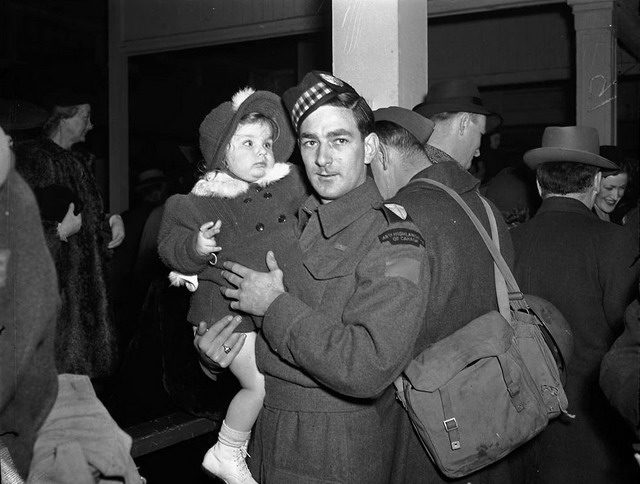

World War II brought significant changes to people’s lives. While Toronto was spared direct combat, it served as a vital support base. During this challenging time, the daily lives of its residents underwent profound transformations. Read on torontoyes.com to discover how World War II impacted Toronto and what its citizens did to adapt and contribute.
Intense Training
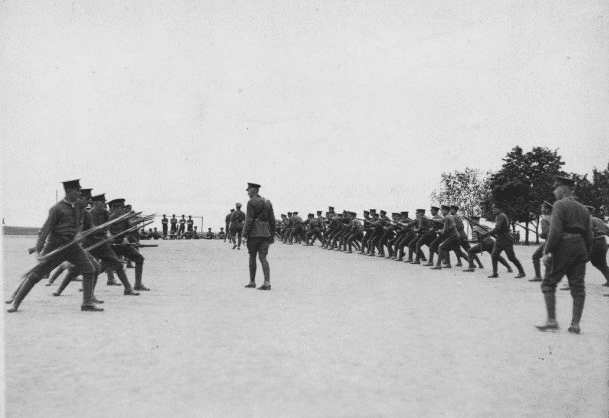
By the fall of 1942, military vehicles were a common sight on Toronto’s streets. Parks such as Riverdale and Eglinton hosted training sessions and battle reenactments. Canadian assault forces stationed on boats in Humber Bay practiced storming enemy positions.
Citywide blackouts were frequent during training exercises. Particularly dramatic incidents occurred in the spring of 1942, when fears spread that a German POW who had recently escaped from Bowmanville might be roaming Toronto’s darkened streets. On predesignated days and at unexpected times, air raid sirens blared, signaling blackouts across a 400-square-mile area stretching from Bronte to Highland Creek.
Daily life for civilians was filled with fear and uncertainty. At the same time, industrial production was fully redirected to support the war effort, providing extensive employment opportunities, particularly for women.
In many ways, Toronto’s wartime transformation fostered a sense of unity among its residents. Community campaigns for fundraising and other initiatives brought people together. The war altered the daily routines of nearly every Torontonian.
Mobilization Efforts
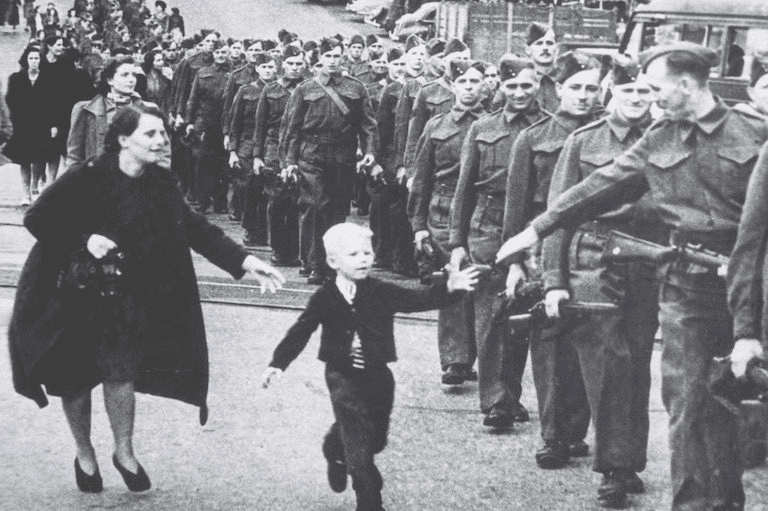
Special enlistment centers were set up across the city, where confused recruits received basic training and were introduced to military life. The government repurposed all available buildings for military needs.
The primary enlistment center for the Royal Cavalry Forces was housed in the Coliseum, a venue previously used for horse fairs. Upon arrival, new recruits underwent quick health checks before weeks of training prepared them for deployment to the European front.
“Everything for the War Effort”
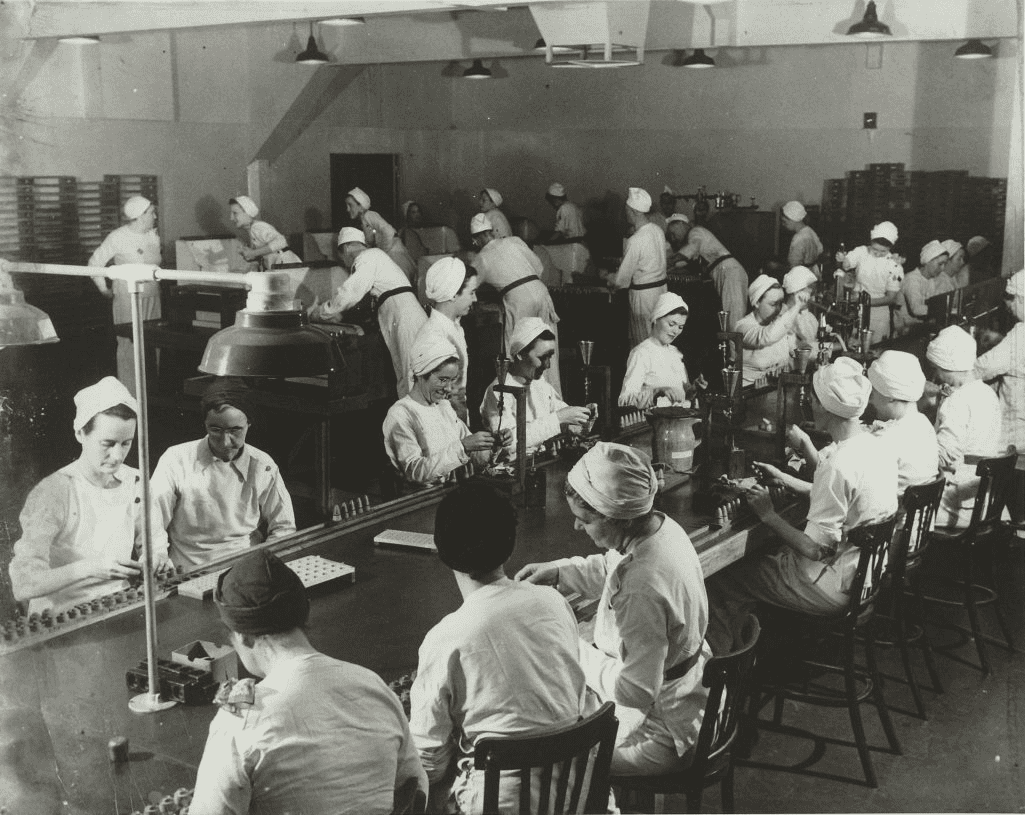
Throughout the war, civilians played a crucial role in producing ships, planes, tanks, and ammunition for the European front.
With more than half of Toronto’s male population deployed, women took over their roles, working in munitions factories, sewing, knitting, and handling other essential tasks. By the end of the war, nearly one million women were employed in the defense industry. Others worked as streetcar operators, railway employees, and in various other professions.
Toronto and its surrounding areas hosted many munitions factories where workers manufactured shells, fuses, and bombs. Working conditions were challenging and dangerous, with explosives and gunpowder posing constant risks. Safety was paramount.
At Toronto’s GECO plant, 20,000 employees worked around the clock. Remarkably, from 1942 to 1945, there were no fatal accidents at this facility.
Even those on the home front found ways to contribute. Many women knitted socks for soldiers using yarn provided by the Red Cross. Others made blankets for families displaced by German bombings.
Over time, knitting and sewing gave way to fundraising efforts, as economic stability and employment opportunities allowed people to contribute financially to the war effort.
Special fundraising campaigns encouraged donations. Economists estimate that Canadians contributed $8.8 billion to wartime needs during World War II. Even schoolchildren participated by collecting and donating money.
Although the war brought immense sorrow and hardship, Torontonians learned to work together and support one another. The collective effort demonstrated the city’s resilience and ability to unite during a time of crisis.