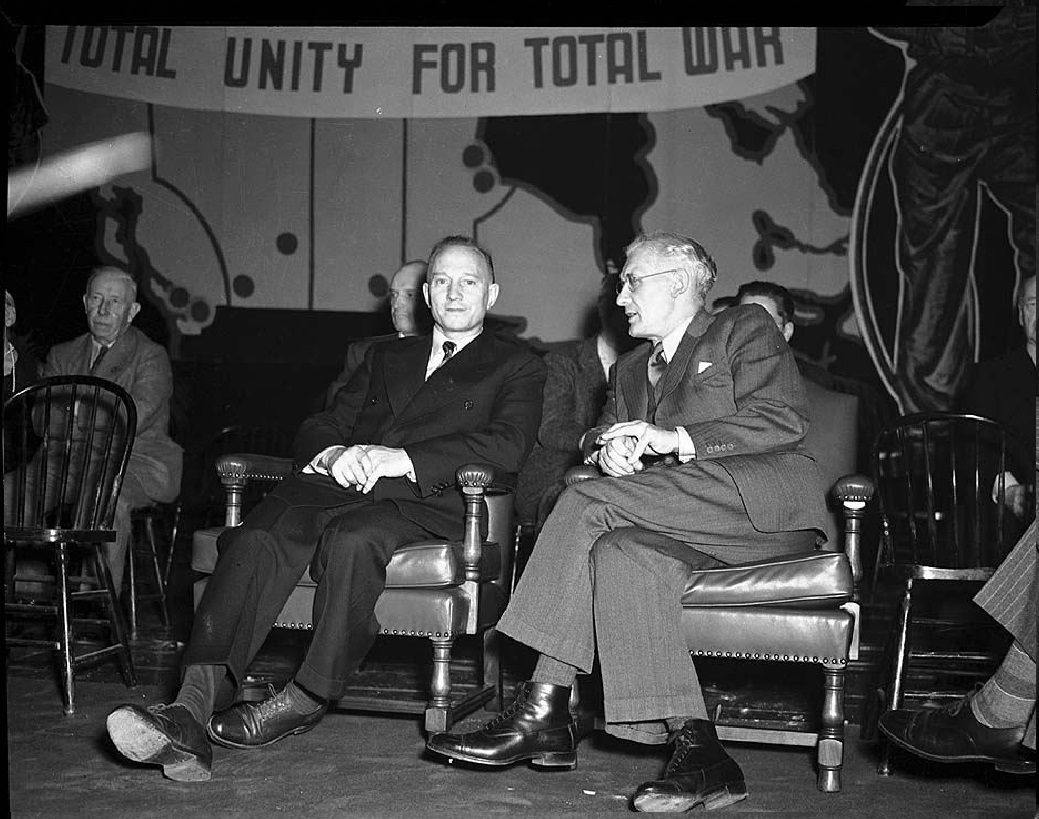

Sam Carr was a professional spy and undercover agent sent by Russia to Canada. Carr arrived in Toronto to support the youth wing of the Communist Party of Canada and to incite revolution. Learn more about his life and activities at torontoyes.com.
Espionage Activities in Canada

In 1924, Sam Carr emigrated from Ukraine to Canada, quickly rising to leadership within the Communist Party. He later traveled to Moscow to study at the Lenin School. In 1931, as repression against the Communist Party began in Canada, Carr returned but was promptly arrested, spending 28 months in Kingston Penitentiary.
After the Communist Party was declared illegal in Canada, the police searched for Carr at his home. His wife, Julia, informed them that her husband was away on business and did not know when he would return. Carr and other party leaders surrendered to the authorities two years later. During his arrest, Carr and his colleagues swore in court to cease working for the Communist Party, but this was merely a formality.
The Communist Party soon rebranded itself as the Labour-Progressive Party, with Carr becoming its chief organizer. This gave him the legal grounds to travel between Toronto and Montreal to handle various party matters.
At the same time, he secretly worked to establish a robust network in Canada in support of the Soviet Union. Carr also assisted the USSR in building a North American spy network among soldiers and scientists, some of whom were involved in the atomic weapons project.
Beneficial Cooperation and Downfall

In 1941, as Germany invaded the Soviet Union, Carr advocated for military conscription, urging Canadians to enlist. He began recruiting spies for Soviet military intelligence, leading to his arrest and imprisonment.
In the fall of 1942, Carr was released from Don Jail. After living underground for several years, he was arrested again but released a few weeks later. Soon after, Carr met Sergei Kudryavtsev, the first secretary of the Soviet embassy. Carr offered Kudryavtsev the services of three individuals who could be valuable to the Soviet Union:
- George Benning – An analyst with Allied War Supplies Corporation in Ottawa, who had access to information about Canada’s military industry.
- Eric Adams – An engineer working with the Foreign Exchange Control Board in Ottawa.
- Fred Poland – An intelligence officer with the Air Force in Toronto.
Kudryavtsev saw Carr’s potential to assist Soviet military intelligence and accepted the offer. From then on, Carr headed the spy group “Ottawa-Toronto.” His friend Fred Rose, who had worked with Carr for many years, led a similar network known as the “Ottawa-Montreal Group.” Together, they identified potential agents, assessed their usefulness, reported to the embassy, and arranged meetings between these agents and professional spies.
In 1943, Rose was elected a Member of Parliament under the Labour-Progressive Party, leaving Carr to take full control of the spy network. Carr regularly met with Kudryavtsev and other embassy officials in Toronto and Ottawa. Each meeting was meticulously planned, with unscheduled ones coordinated through coded messages relayed by intermediaries. He provided intelligence to the Soviet Union as needed.
Carr was brought to trial for his severe political crimes. He was involved in nearly every aspect of the Soviet espionage operation, writing reports and acting as a courier. In court, Carr denied everything, including his meetings with Soviet officials and his education at the Lenin School.
After a 14-day jury trial, Carr was found guilty and sentenced to six years in prison. He served five years at Kingston Penitentiary. Despite his incarceration, his espionage activities persisted. Carr remained under close surveillance by the RCMP until his death.