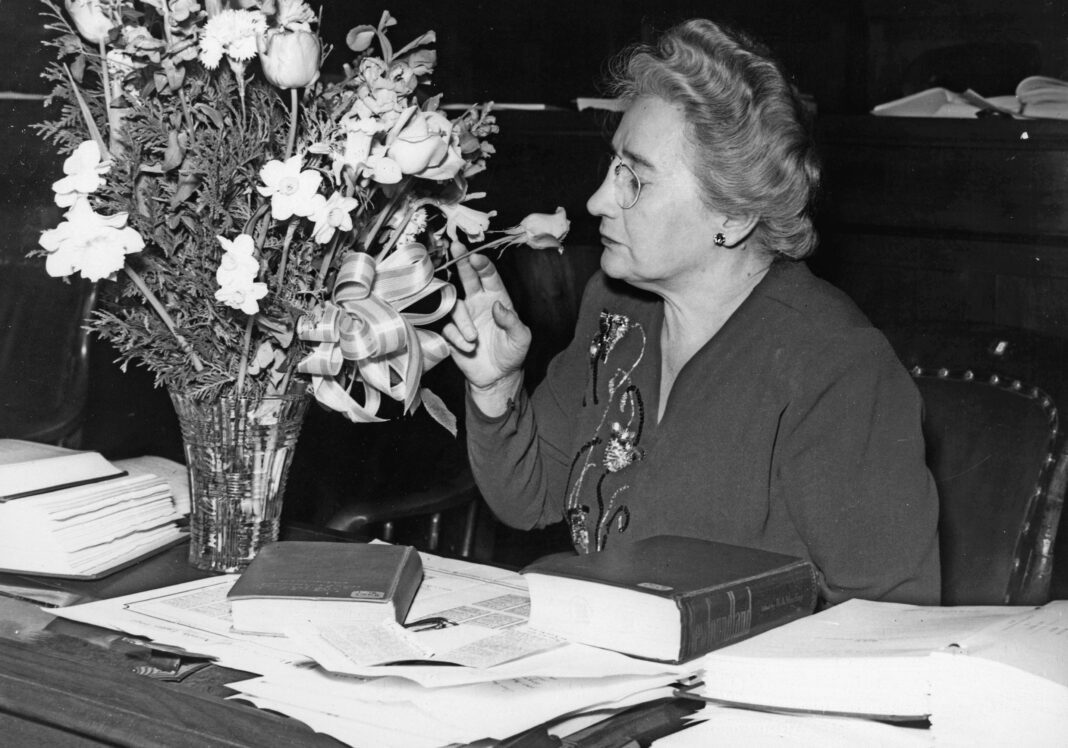

Agnes Macphail was a trailblazing politician and reformer, recognized as one of the first two women elected to the Ontario Legislature. Her impactful contributions improved the quality of life for Toronto residents, and she initiated several significant campaigns. Among her achievements, Macphail championed Ontario’s first equal pay legislation. Learn more about her life and political career on torontoyes.com.
Early Years

Agnes Macphail was born on March 24, 1890, in Proton Township, Grey County, Ontario. Raised on a farm, she experienced the hardships of rural life early on and dreamed of living and working in the city.
Her desire for education was initially met with resistance from her parents, but after two years of persistence, they allowed her to attend school. In 1906, she enrolled at Owen Sound Collegiate and later continued her studies at Normal School. Upon graduating, Macphail worked as a teacher in various schools across Ontario, Toronto, and Alberta.
Political Career

In 1914, Macphail joined the United Farmers of Ontario (UFO), an organization focused on education and politics. By 1919, her efforts led to a victory in municipal elections under the Progressive Party, which was affiliated with the UFO.
In 1921, she became the only woman elected to Parliament during that year’s federal elections, representing Grey South East. Her political career gained momentum as she built a network of allies and supporters in the House of Commons.
Macphail frequently faced criticism from her colleagues, who often opposed her progressive views. Her primary political focus was advocating for the farmers in her region, as well as defending the rights of miners, immigrants, and incarcerated individuals.
Some critics accused Macphail of communist sympathies due to her unwavering support for marginalized groups. When she denounced militarism and imperialism, she was even accused of treason. Undeterred, she criticized the government for subsidizing the British Empire Steel Corporation while neglecting the poor living and working conditions of miners in Toronto.
Her advocacy led to the creation of a cooperative movement that defended the interests of farmers and industrial workers. In 1924, Macphail and her colleagues from Alberta split from the Progressive Party and formed the Ginger Group.
The onset of the Great Depression in 1930 saw the Ginger Group merge with the League for Social Reconstruction to form the Co-operative Commonwealth Federation (CCF). This federation pushed for the nationalization of industries, improved pensions, and unemployment insurance.
In 1934, the United Farmers, concerned about communist influence, withdrew from the CCF, prompting Macphail to leave Parliament. However, in 1938, she rejoined the CCF and represented the party in the Ontario Legislature.
Major Achievements

One of Macphail’s most notable achievements was her work on prison reform. A riot at Kingston Penitentiary in 1923 motivated her to investigate prison conditions. Appalled by what she discovered, she began advocating for changes in the penal system.
Over the years, she called for educational and physical programs for inmates. In 1939, the Liberal government established the Royal Commission to investigate Canada’s penitentiary system, leading to significant reforms.
In 1943, Macphail ran in Toronto’s York East riding under the CCF banner. After winning the election, she continued her advocacy for farmers, prisoners, and women’s rights.
Another landmark achievement was the passage of Ontario’s first equal pay legislation in 1951.
Agnes Macphail remained active in politics until her death in the winter of 1954. Her tireless efforts left a profound impact on Canadian society, and her legacy as a reformer and advocate for justice continues to inspire future generations.