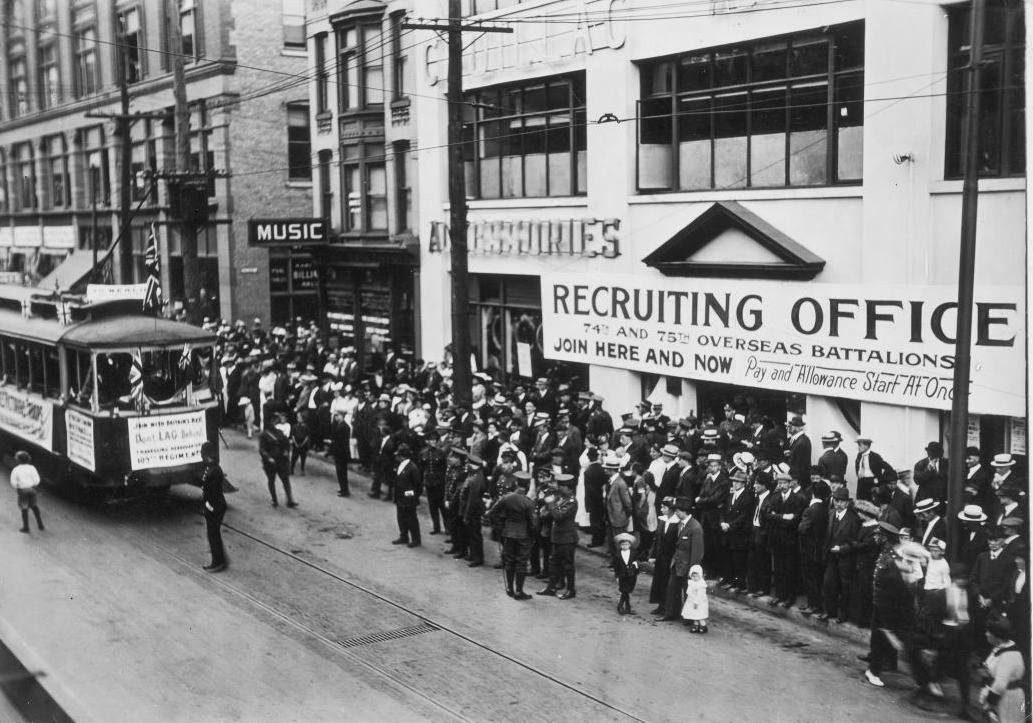

The Second World War left an immense scar on the entire world. It’s a chapter in history we must always remember to ensure such a global conflict never reoccurs. The main theatres of war during WWII were in Europe and the USSR. Fortunately, Canada was spared enemy bombings on its soil. However, Canadians were far from bystanders in the war. Every city, Toronto included, played an active role in Canada’s war effort. Toronto, in particular, became a hub for military training and artillery production. Today, however, we’ll focus on the mobilization process in Toronto. You can find more on this topic on the torontoyes.com.
The Specifics of Mobilization

Canada declared war on Germany in 1939. Initially, the country dispatched one division to Europe. By June 1940, the Canadian government enacted conscription for home defence under the National Resources Mobilization Act (NRMA). This legislation empowered the government to register men and women, and to direct them into jobs vital for the wartime military industry. Mobilization commenced nationwide, including in Toronto.
It’s worth noting that Canada’s population at the time was approximately 11 to 12 million people. Consequently, the country was able to assemble a remarkably strong army. Mobilization efforts were also underway in Toronto, where locals actively enlisted in the armed forces and took up jobs in war production plants.
However, mobilization wasn’t without its challenges everywhere. The National Resources Mobilization Act (NRMA), as it was known, sparked considerable controversy, particularly among French Canadians who opposed conscription for overseas service. The crux of the issue was that defending the country often meant fighting in European war zones. This sentiment was also shared by some residents in Toronto and across the Ontario region.
The question of conscription for service abroad remained highly contentious, especially following the 1942 plebiscite. This vote revealed that while a majority of English-speaking Canadians supported conscription, French Canadians largely remained opposed.
Notably, Torontonians conscripted under the NRMA who refused to serve overseas were derisively nicknamed “Zombies.” These individuals often faced scorn, as the majority of enlisted personnel did volunteer for overseas combat.
That said, in Toronto and the broader Ontario region, mobilization proceeded largely without major protests. In Quebec, however, significant rallies and demonstrations did occur.
Torontonians in Military Operations
Residents of Toronto took part in numerous key military operations during the Second World War:
- Operation Jubilee (Dieppe Raid): On August 19, 1942, approximately 5,000 soldiers, predominantly from the 2nd Canadian Infantry Division, landed on the coast of occupied France. This raid, unfortunately, proved to be a costly failure.
- Normandy Landings (D-Day): Mobilized Torontonians also participated in the pivotal Normandy landings as part of Operation Overlord.
- Liberation of the Netherlands: Canadian forces played a crucial role in liberating the Netherlands from German occupation towards the end of the war.
Wartime Production in Toronto
It’s well known that Toronto became a major centre for manufacturing military equipment and munitions. Factories and businesses across the city shifted to full-capacity wartime production. Men not mobilized for active service often found work producing aircraft, tanks, and other essential military supplies. Significantly, a large number of women also joined the workforce in these war industries.
Furthermore, it’s important to remember that Toronto played a vital role during the Second World War as a key training ground for the Canadian armed forces. A cornerstone of Canada’s military training efforts was the preparation of aircrew for the Royal Air Force and the Royal Canadian Air Force under the British Commonwealth Air Training Plan (BCATP).
This is how the people of Toronto contributed to the Second World War effort, helping to bring about the Allied victory. We hope you found this material informative and that you’ve learned a little more about your home city.