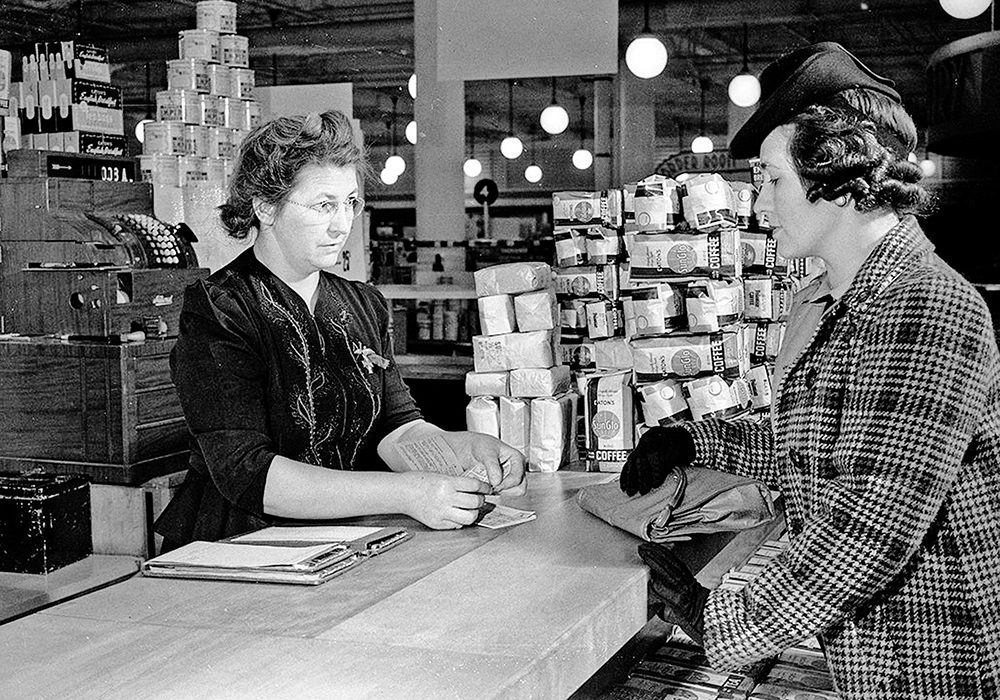

During the Second World War, food in Toronto and other Canadian cities became “special,” with eating habits shaped by widespread shortages, as torontoyes.com notes. Despite these challenges, food remained a central focus of daily life, and Toronto’s government implemented a series of measures to change people’s diets.
“Patriotic” Foods

During the war, a dedicated propaganda campaign promoted certain “patriotic” food items. Simultaneously, strict controls were placed on prices and production.
The core objective of many government measures was to provide food for Canada’s overseas allies and soldiers. Propaganda reminded citizens regularly that “food was a weapon of war.”
At the war’s outset, Torontonians voluntarily contributed to Canada’s commitment to exporting food to Britain, particularly as European markets declined.
Apples and lobster were among the first items rebranded as “patriotic” foods. In the winter of 1939, the Department of Agriculture began running advertisements urging citizens to “sell apples daily.” Magazines like the Canadian Home Journal published articles proclaiming the joy and “patriotic” act of eating Canadian lobster, which became a staple ingredient in many dishes. Lobster cocktails and sandwiches, for instance, were especially popular.
Food Campaigns

Torontonians enthusiastically participated in food-related initiatives. Many women and schoolchildren spent long hours working on farms for minimal pay.
The significant shortage of farm labour during the war stemmed from the mass mobilization of male workers. Much of the farm produce was allocated to soldiers and allied forces overseas.
Home canning also became a popular wartime practice. Torontonians preserved fruits and vegetables, which were sent to soldiers on the front lines. Another widespread campaign encouraged the collection of animal fats and bones. Advertisements in newspapers and magazines reminded citizens that fats and bones were used to produce ammunition.
The government encouraged women to “be ammunition makers in their own kitchens.”
Ensuring Proper Nutrition

By 1941, analysis showed that over 60% of Canadians suffered from vitamin and mineral deficiencies. In response to these alarming statistics, the federal government established a Department of Nutrition in 1941.
In 1942, the department introduced a food guide outlining six essential food groups for healthy eating: milk, cereals and bread, vegetables, fruit, eggs, and meat and fish.
Due to periodic food shortages in Toronto and rising prices, the government enforced strict controls over food consumption. Vendors who were caught intentionally raising prices faced fines or imprisonment.
To regulate food production and distribution further, the Wartime Prices and Trade Board introduced additional measures. These included a ban on sliced bread and cakes, as well as restrictions on the production of certain goods like chocolate bars and soft drinks. The production of canned products such as pork and beans also slowed significantly.
Artificial sweetener saccharin became a common sugar substitute, and soy entered Torontonians’ diets in various forms, replacing salted peanuts and serving as a primary ingredient in chocolate bars.
Among the most common recipes made by women during this period was “war cake.” Although it resembled a dessert, the ingredients were simple and practical: hot water, sugar, raisins, flour, baking soda, cinnamon, and cloves.
Meanwhile, the food provided to soldiers was carefully balanced. By 1943, a standard military ration provided nearly 3,900 calories per day, including ample fruits, vegetables, and milk.