
World War II was a distinctly harrowing chapter in Toronto’s history, much like it was for the entire world, undoubtedly. Although active combat didn’t take place on Canadian soil, Canadians were deeply involved in the war effort through mobilization, and Toronto became a key centre for military training and artillery production. In this article, we’ll explore how the city of Toronto transformed after the war. Read more about this on torontoyes.com.
Toronto Post-War: Active Growth and Transformation
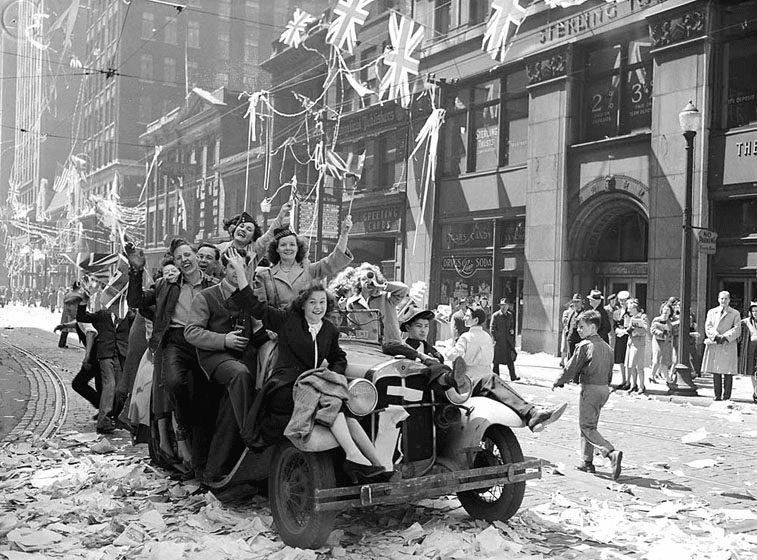
When World War II ended, humanity breathed a collective sigh of relief. The world could finally begin to live without war. However, the task of rebuilding infrastructure and entire cities in various countries lay ahead. Toronto also felt the impact of the war’s end. After the war, our city welcomed a significant number of immigrants from Europe and other parts of the globe. This influx led to rapid population growth in Toronto. In fact, just six years after the war concluded, the city’s population reached 1 million. Within two decades, that figure had doubled.
It’s noteworthy that Ukrainians were among the largest immigrant groups to settle in Canada, and specifically Toronto. Following World War II, hundreds of thousands of Ukrainians found themselves in refugee and prisoner-of-war camps across Europe. Consequently, many chose to emigrate from Europe to Canada. In Toronto, Ukrainians and other migrants sought employment in large factories and plants. Statistically speaking, according to the 2006 census data, approximately 122,000 Ukrainians resided in Toronto. This represented over 10% of the entire Ukrainian diaspora in Canada.
In addition to Ukrainians, many Italians, Chinese, and Filipinos also came to Toronto. It should be added that post-war immigration profoundly changed Toronto’s demographics, making it one of the most multicultural cities in the world.
Toronto’s Post-War Economy
Toronto’s economy also experienced vigorous development after World War II. The large influx of migrants was a significant contributing factor to this growth. Migrants from Europe and Asia created a substantial labour market and boosted consumer demand.
And there were plenty of job opportunities in Toronto. In the post-war period, the city emerged as one of Canada’s largest industrial hubs. Key industries such as iron and steel manufacturing and machine building flourished here. These sectors made significant contributions to the economy of both the city and the country as a whole.
Gradually, the financial sector began to develop in our city. As a result, Toronto transformed into Canada’s financial capital. It is home to the headquarters of Canada’s five largest banks and numerous national corporations. Furthermore, the Toronto Stock Exchange became one of the largest in the world.
The post-war period also saw active development in the service sector and construction. Notably, Toronto experienced a construction boom in the 1970s, with the city actively building skyscrapers. Specifically, the CN Tower, a television tower, was erected in 1976, becoming a symbol not only of Toronto but of Canada as a whole.
It’s worth recalling that during World War II, Toronto played a crucial role in military training and wartime production. Large factories operated here, manufacturing military equipment and ammunition. The city was also a site for military training and instruction. As you can imagine, many refugees fleeing the war came to Canada and, specifically, to Toronto. The city authorities endeavoured to provide these migrants with essential necessities. However, it’s true that Canada also experienced product shortages during that time.
And so, this is how the city of Toronto recovered and transformed after World War II. We hope you found this material informative and learned more about your home city.