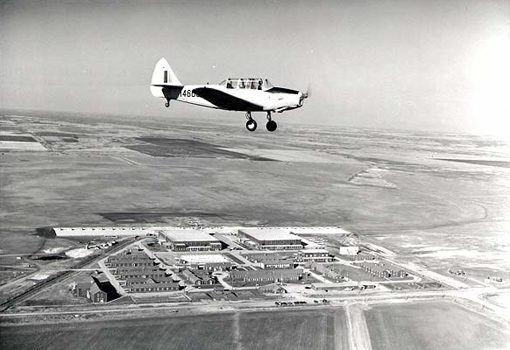

World War II is a dark chapter in the history of the entire world. Every nation remembers the horrific events of the war with dread. Admittedly, combat operations didn’t take place in every country. Fortunately, Canada itself was not a battlefield, yet our country played an active and crucial role in the Second World War. Today, we’ll explore the pilot training bases for the Royal Canadian Air Force (RCAF) that operated in Toronto. Read more about this on torontoyes.com.
One of the Largest Aviation Training Programs in History
Our city was deeply involved in the war effort. In Toronto, men were mobilized, and industries shifted to producing munitions and military equipment. Canada was also heavily involved in training military personnel, establishing various training bases and centres. Many of these were located in Toronto.
The British Commonwealth Air Training Plan (BCATP) was an agreement developed by the United Kingdom, Canada, Australia, and New Zealand during World War II. To this day, the BCATP remains one of the largest and most successful aviation training programs in history. This program trained pilots, navigators, bomb aimers, air gunners, wireless operators, and flight engineers, among others.
It’s worth noting that Canada was the primary location for these training operations. Personnel from many countries trained here, including Argentina, Belgium, Ceylon (now Sri Lanka), Czechoslovakia, Denmark, Finland, Greece, Poland, and the United States.
Key Pilot Training Bases in Toronto
As you can imagine, Canada hosted numerous training schools. Consequently, extensive infrastructure for aircrew training was developed in Toronto and other cities. By the early 1940s, Canada had 107 schools and 184 ancillary units dedicated to pilot training.
Toronto itself was home to several institutions specializing in pilot training. In April 1940, the first Canadian training course commenced in our city with 166 recruits. A few months later, 34 of these recruits graduated as pilots and remained in Canada. They served within the BCATP as instructors and staff pilots.
It’s important to highlight that Toronto and other Canadian cities were chosen as primary training locations due to several favourable factors. Firstly, Canada offered vast open spaces ideal for intensive flight and navigation training. Secondly, its proximity to U.S. industrial centres meant access to fuel supplies. Thirdly, it was relatively close to European theatres of war. And perhaps the most crucial factor was the complete absence of any threat from enemy aircraft. Everyone was safe and could train without interference.
Canada Trained Over 50,000 Pilots
The training bases necessitated significant infrastructure development in Toronto and other Canadian cities. As a result, approximately 8,300 buildings were constructed across Canada during World War II, including 700 hangars. Fuel storage facilities with a total capacity of over 26 million imperial gallons were also established.
Notably, during World War II, over 167,000 students, including more than 50,000 pilots, were trained in Canada under the BCATP.
Aircraft Used for Pilot Training in Toronto
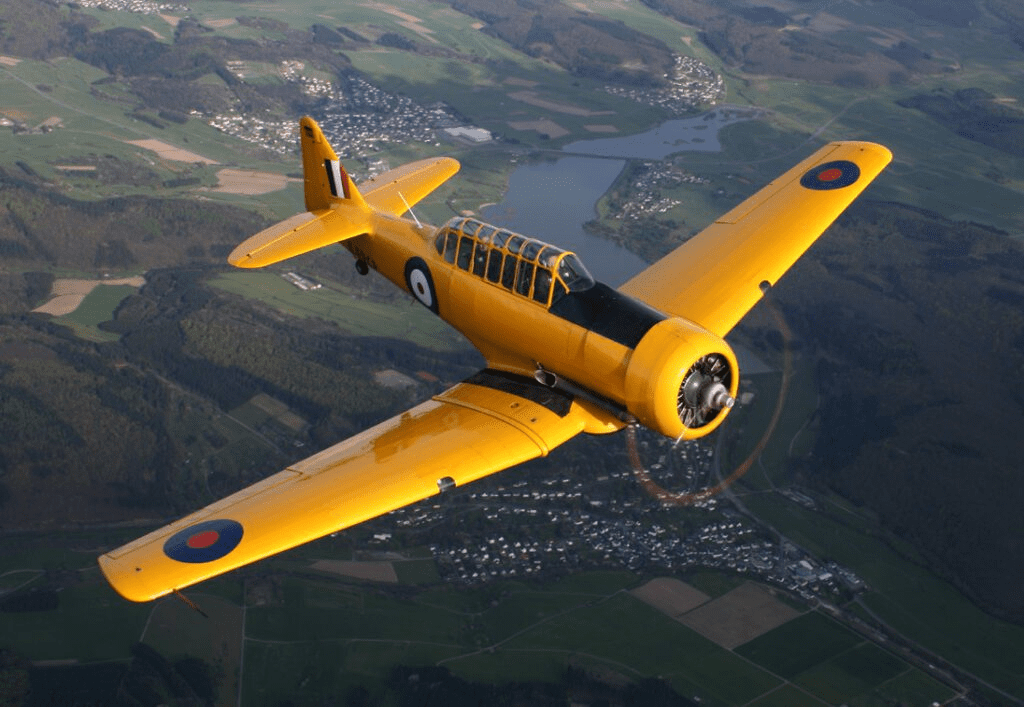
Toronto’s flying schools were among the many institutions where young airmen learned the fundamentals of aviation. Our city also had military airfields for practical training exercises. Indeed, pilots trained on various aircraft types. Here are some of the main ones:
- De Havilland DH.82 Tiger Moth. This two-seater biplane was a primary elementary trainer for new pilots, popular for its simplicity and ease of handling.
- Fairchild PT-26 Cornell. An ideal aircraft for the initial stages of flight training, it offered good manoeuvrability and was used extensively.
- North American Harvard. Used in the intermediate and advanced training phases, this aircraft prepared pilots for more complex combat manoeuvres.
- Avro Anson. Pilots transitioning to multi-engine combat aircraft, such as bombers, often trained on this twin-engine plane. The Anson was also widely used for navigation and bombing training.
- Boeing Stearman. Another well-known biplane trainer, the Stearman was also used in Canadian training programs, praised for its ruggedness and suitability for primary flight instruction.
After completing their training in Toronto, most graduates went on to serve in Great Britain’s Royal Air Force and other Commonwealth air forces. These pilots participated in combat operations on various fronts.
Pilot training bases in Toronto were a crucial component in preparing aviation personnel during World War II. This was a significant Canadian contribution to the Allied victory.
That’s the story of Toronto’s wartime training bases. We hope you found this information insightful and learned more about our city’s vital role during the Second World War.