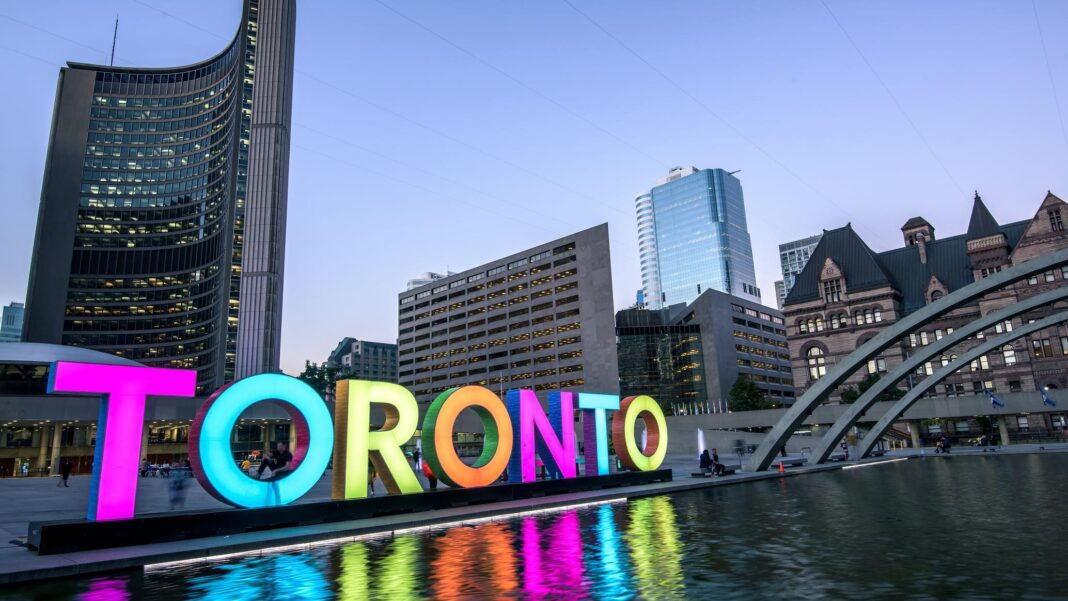

Toronto is Canada’s largest city, home to a population of several million. Our city occasionally experiences significant events that remain in history forever. Today, we’ll talk about a unique and remarkable event – when Toronto first reached the one million population mark. This undoubtedly became a crucial milestone in the megacity’s development. Read more about this on torontoyes.com.
Toronto’s Active Growth as an Immigration Hub

In 1951, a landmark event occurred for our city – Toronto’s population reached one million for the first time. This population growth was the result of a long process of intensive migration, economic development, and urbanization throughout the first half of the 20th century.
As early as the 19th century, migrants, especially from European countries, began actively arriving in Toronto. By 1891, the city’s population had already exceeded 180,000. Subsequently, Toronto’s population continued to grow as people from surrounding villages and towns moved to the city. We also shouldn’t overlook the high birth rates during that period.
Then World War II began. As is known, during the war, our city started actively producing weapons, ammunition, and military equipment. Consequently, Toronto experienced a significant economic boom, which spurred intensive population growth.
Demand creates supply, so industry actively developed, new residential areas were built, and infrastructure improved. All this made the city attractive to new residents.
A New Era of Development for Toronto
When Toronto’s population surpassed one million in 1951, the city became one of the largest in Canada. This year marked not only a demographic breakthrough but also the beginning of a new era of urban development. Accordingly, over the years, Toronto’s population doubled. Incidentally, in the 1980s, Toronto overtook Montreal to become the country’s largest city.
The large population prompted the city authorities to act and create new projects for comfortable living. For example, in 1954, the Municipality of Metropolitan Toronto was created. This involved amalgamating the city with 12 surrounding municipalities to coordinate the management of infrastructure, transportation, and other important areas. This step laid the foundation for the megacity’s further development. Also in that year, the first subway was opened. Notably, this event gained national significance, as it was the first subway opened not only in Toronto but in all of Canada.
It’s worth noting that the opening of the subway significantly eased the burden on other forms of transport in the city, made it easier for residents to get around, and contributed to Toronto’s further development as a megacity. Over time, the subway system expanded, with new lines and stations appearing, making the city’s transit network one of the most developed in North America.
Key Reasons for Population Growth
The preconditions for Toronto’s population growth include:
- Immigration during the Great Famine. As early as the mid-19th century, the Irish began moving to our city during the Great Famine in Ireland. They remained one of the largest ethnic communities for a long time. The British, Scots, and Germans also played a significant role in shaping Toronto’s population.
- One of the largest Ukrainian diasporas. Ukrainians also began to move to Toronto en masse in the last century. By the way, by 1951, almost 400,000 people of Ukrainian descent lived in Canada. Toronto became one of the main centres of the Ukrainian community in North America.
We hope our material was informative for you and that you learned more about your home city.