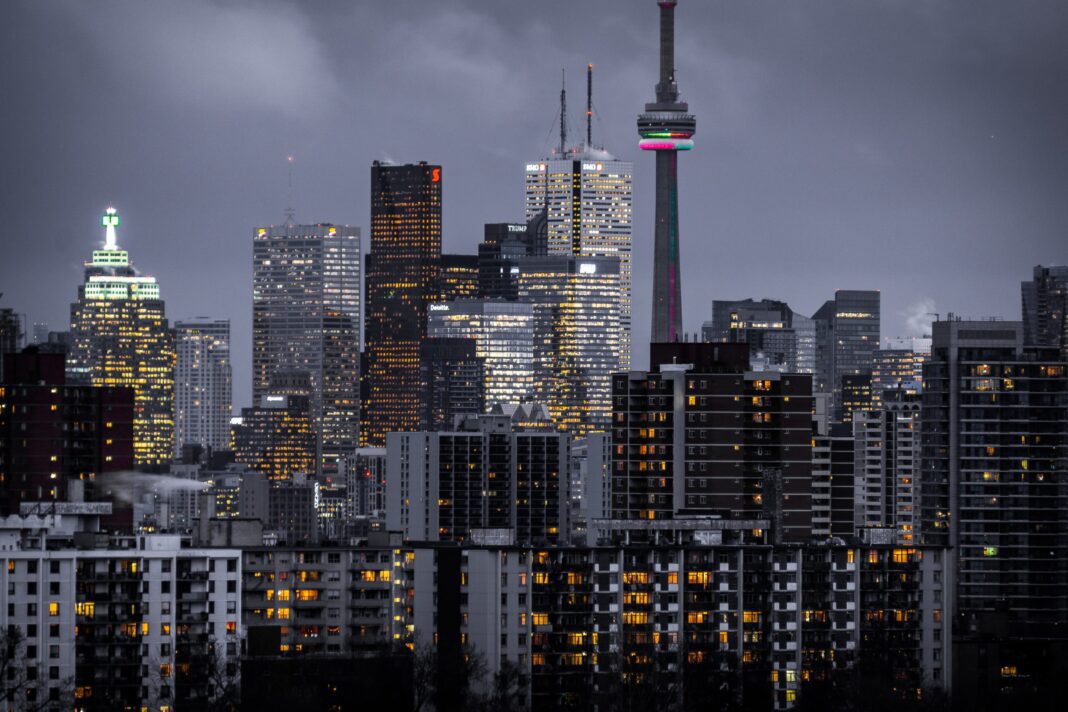

Toronto, Canada’s largest city and the capital of Ontario, spans an area of approximately 631.10 square kilometers. With a population of about 2.8 million as of 2021, it ranks among the most densely populated cities worldwide. A vibrant hub of opportunities, Toronto thrives today—but it wasn’t always this way. Until 1998, Toronto was an ordinary city. The pivotal moment came when several municipalities merged into a single megacity. This significant event reshaped not only Toronto but the entire province. Read more about this historic milestone on torontoyes.com.
Precedents Leading to the Merger
The 1998 amalgamation marked a transformative political event that altered the administrative structure and governance of the region, leaving a lasting impact on Toronto’s history.
The foundation for this merger was laid back in 1954 with the creation of the “Metropolitan Toronto” agglomeration. This initiative combined Toronto with several neighboring towns and villages, allowing local governments to manage land use, water supply, public transportation, and other critical services more effectively.
Metropolitan Toronto comprised the city of Toronto and municipalities such as New Toronto, Mimico, Weston, and Leaside, along with villages like Long Branch, Swansea, and Forest Hill. It also included towns such as Etobicoke, York, North York, East York, and Scarborough.
Post-World War II suburban expansion created an urgent need for efficient governance of these growing communities.

The Amalgamation of Municipalities into a Megacity
Nearly five decades later, in 1998, the Ontario government decided to merge Toronto with five other municipalities: York, North York, East York, Scarborough, and Etobicoke. This decision officially transformed Toronto into a megacity and Canada’s largest urban center.
The merger centralized administrative functions and resources, making governance more cohesive. Following this momentous event, Toronto became a magnet for immigrants, attracting people from across provinces and countries. By population, Toronto became the fifth-largest city in North America, trailing only Mexico City, New York, Los Angeles, and Chicago. By 2013, it surpassed Chicago in population. This demographic surge motivated city leadership to expand infrastructure and create new neighborhoods.
Key changes to the city’s structure after the amalgamation included:
- Western Toronto: The town of Etobicoke became the city’s western section, home to numerous residential areas and industrial zones.
- Eastern Toronto: Scarborough was transformed into the eastern part of the megacity, known for its parks and cultural venues.
- Northern Toronto: North York evolved into the city’s northern region, featuring residential complexes and shopping centers.
- East York: Once a town, East York became a residential district of Toronto.
- York: This former town now comprises a mix of historic neighborhoods and new developments.
The amalgamation also saw the emergence of new neighborhoods and communities, such as:
- Humber Bay Shores, famed for its waterfront views.
- Leslieville, known for cozy cafes, shops, and cultural events.
- Liberty Village, a modern residential and commercial hub.
Controversies Surrounding the Merger
Despite its long-term benefits, the amalgamation faced significant opposition. A 1997 municipal referendum revealed that over three-quarters of voters rejected the merger. However, with only a third of eligible voters participating, the government proceeded with its plans.
Critics, including both politicians and citizens, feared that centralization would erode local identities and diminish community-specific governance.
Changes After the Amalgamation
The merger significantly reshaped Toronto. Former industrial zones were repurposed into residential complexes. For example, Mimico, once known for its factories, transformed into a residential area. Many industrial lands were reallocated for commercial and residential use, with manufacturing facilities moving outside the city.
Transportation infrastructure improved as roads were modernized and public transit systems were upgraded. Residents found it easier to commute to remote parts of Toronto.
The creation of the Greenbelt helped preserve natural areas and prevent further urban encroachment onto industrial lands.
Toronto is a unique city with a rich history, remarkable architecture, and dynamic growth. Every chapter of its past has contributed to its development. The 1998 amalgamation was a critical step in Toronto’s evolution, addressing the needs of its time.
We hope this article has been informative, shedding light on this defining moment in Toronto’s history.
Sources: