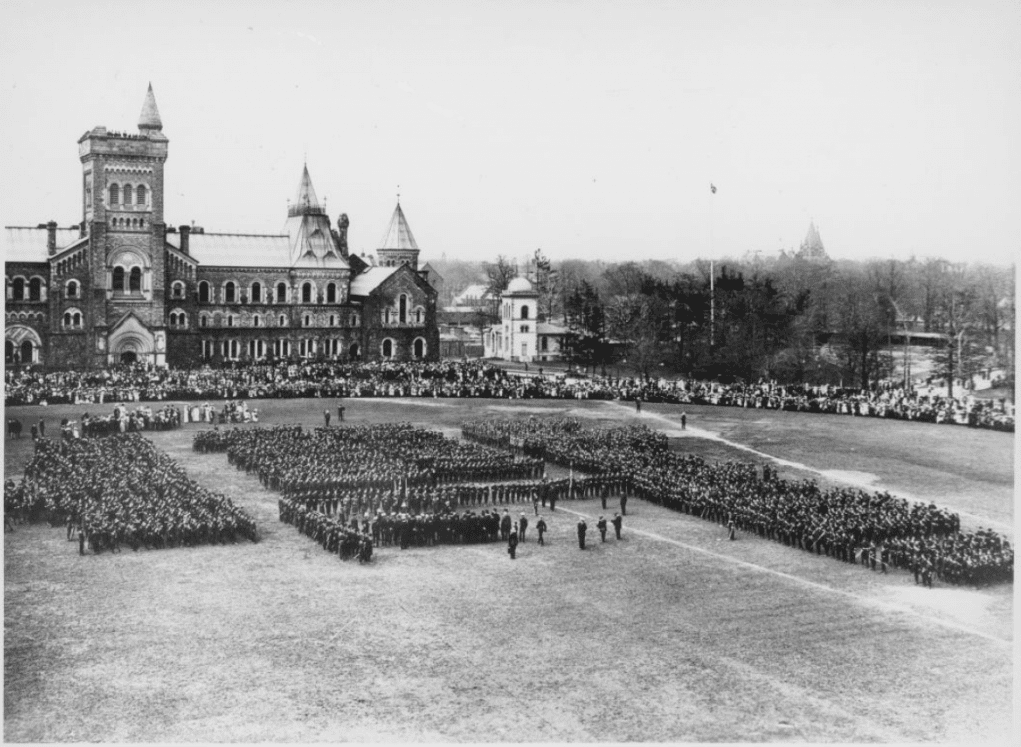

During World War I, Toronto was the largest Anglo-Canadian city and served as the headquarters for the military district covering Central Ontario. The city became a hub for soldier training and fundraising efforts to support troops and their families abroad. The war also saw women in Toronto assume new societal roles. More details are available on torontoyes.com.
The war intensified long-standing debates surrounding alcohol consumption and women’s suffrage. In 1916, prohibitionists achieved victory with the enactment of dry laws. By 1917, women were granted the federal right to vote, which allowed the government to introduce conscription.
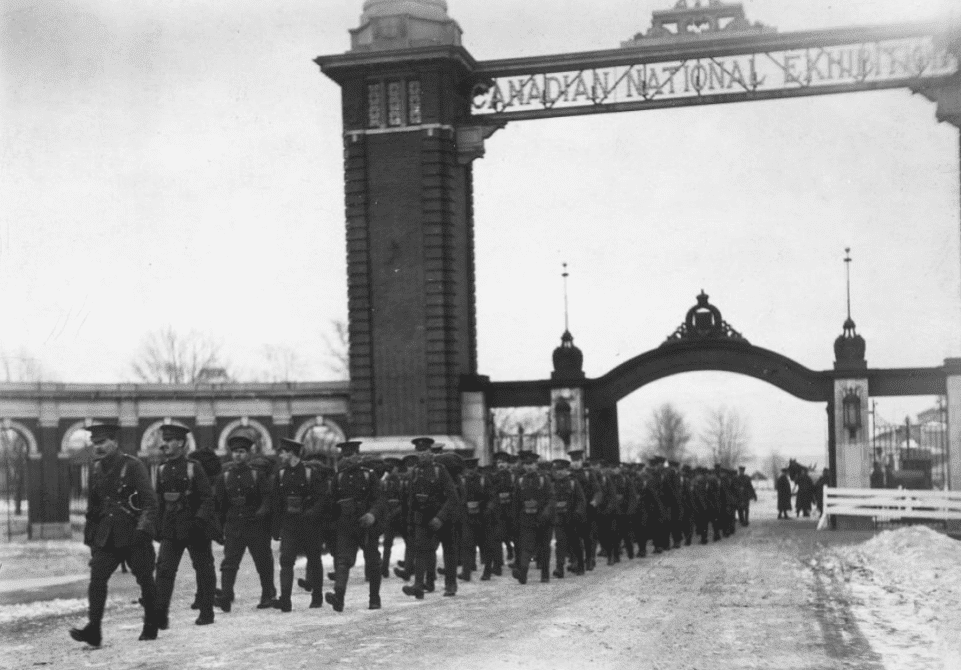
However, the onset of war also led to increasing intolerance toward ethnic minorities. Anti-German sentiment grew significantly, and “enemy aliens” were registered and interned at Exhibition Park. In 1918, returning veterans attacked local Greek residents, accusing them of not “doing their part.”
Encouraging Enlistment
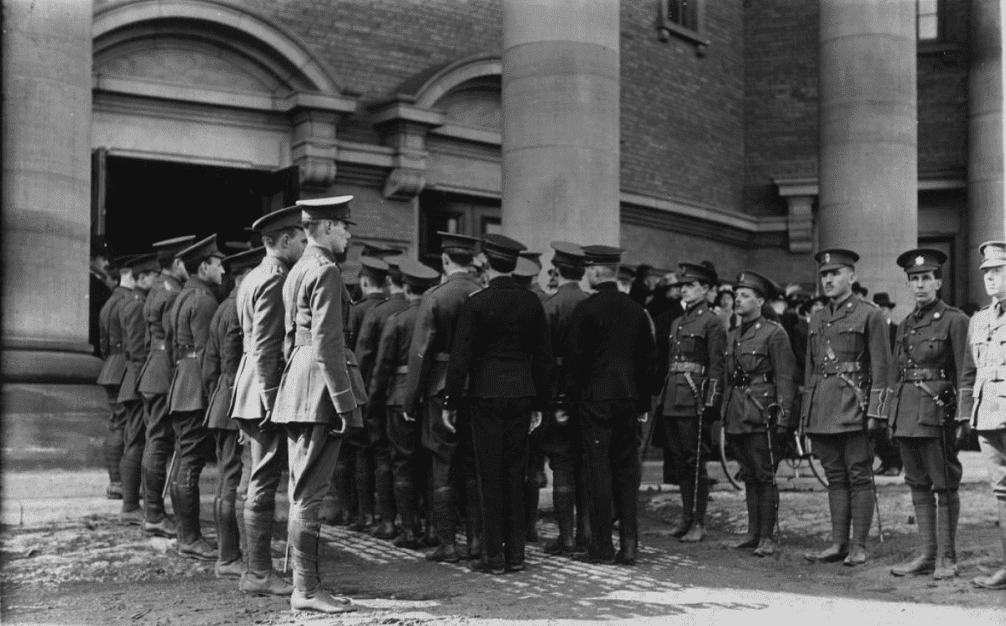
World War I was declared in August 1914, and Torontonians rushed to enlist. City militias, schools, and clubs actively supported recruitment drives. As volunteer numbers dwindled, authorities developed specific incentives to encourage enlistment. More than three-quarters of eligible men in Toronto volunteered for military service.
By the end of the war, over 45,000 Torontonians had served with the Canadian Expeditionary Force or the British Army.
Toronto also became a vital training centre. Exhibition Park operated as a winter training camp, hosting over 10,000 soldiers between 1915 and 1916. The University of Toronto housed the Royal Flying Corps, playing a significant role in aviation training.
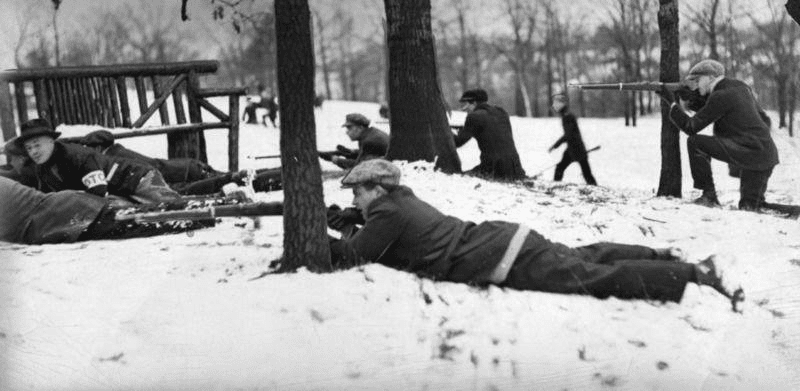
The city’s central railway hub facilitated troop deployments, sending trained soldiers to Quebec and Nova Scotia, where they boarded ships bound for England.
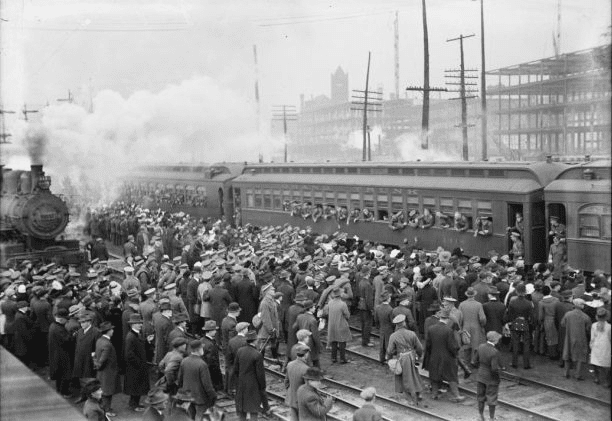
Supporting the Army and the Role of Women
City Hall became the patriotic epicentre of Toronto during the war. Officials organized rallies and fundraising parades, with city councillors and the mayor regularly in attendance.
The municipal government provided both symbolic and material support. City-owned horses were requisitioned for military purposes, and authorities incentivized enlistment. In early 1915, every enlisted soldier received life insurance coverage, which cost the city $4.4 million.
Funding for the war effort came from both the city and its citizens. Torontonians donated significant sums of money. For instance, Khaki Day in 1915 raised $34,000 for the Citizens’ Recruiting League.
The Patriotic Fund played a pivotal role, collecting over $9 million during its four-year existence to support soldiers and their families. Additionally, the Victory Loan campaign generated substantial contributions for industrial and economic development during the war.
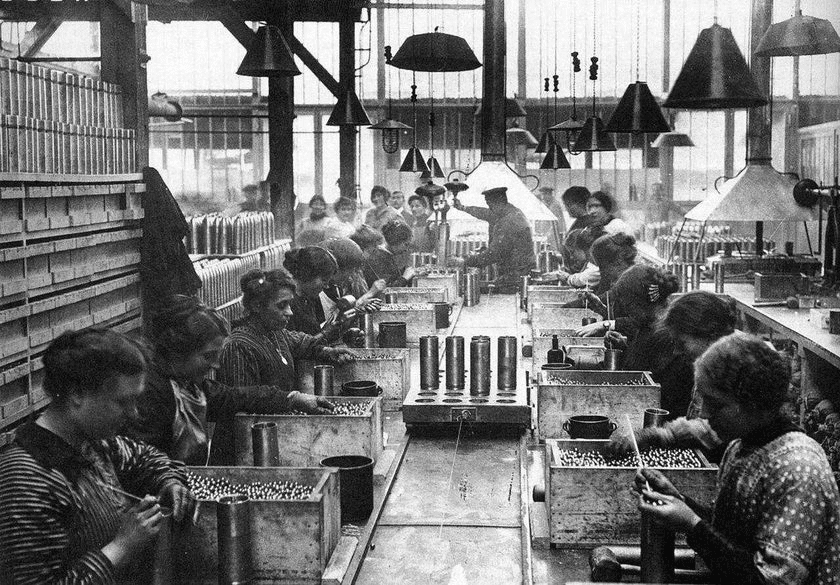
With most men away at war, women’s roles became crucial. Initially, women knitted socks and sewed clothing for soldiers. Later, they began working in factories and industries. By the end of 1915, over half of the workforce at Toronto’s munitions factories consisted of women.
Torontonians enthusiastically volunteered for various tasks to provide material support to soldiers, demonstrating a collective spirit of resilience and sacrifice.
On November 11, 1918, Toronto celebrated the armistice and the end of hostilities. The peace treaty that formally ended the war was signed in June 1919.