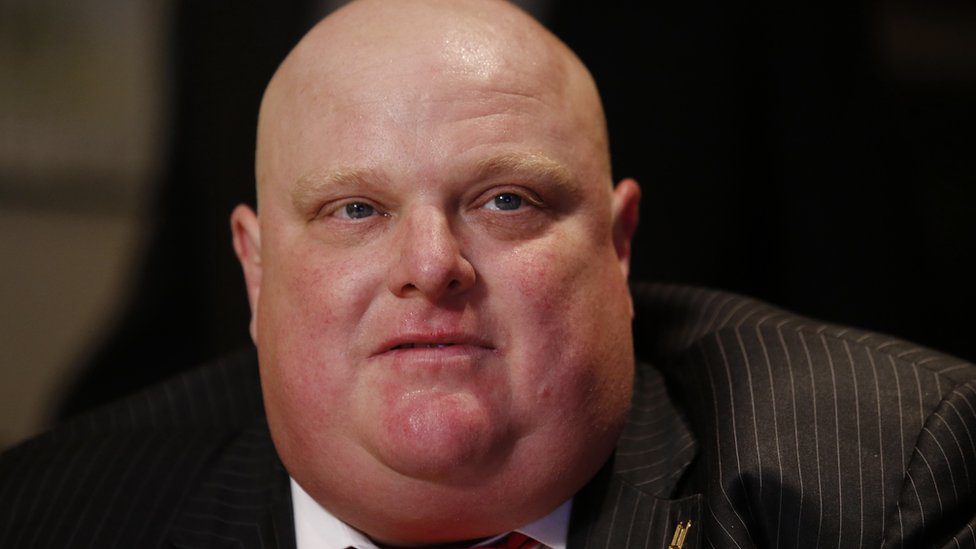

Rob Bruce Ford was a municipal politician and former mayor of Toronto, known for challenging conventions and becoming a polarizing figure in Canadian politics. His tenure gained international attention due to allegations of substance abuse while in office. Read more about his life and political career on torontoyes.com.
Early Life and Education
Rob Ford was born on May 28, 1969, in Etobicoke. He grew up in a wealthy family as the youngest of four children. The Ford family’s affluence stemmed from the successful business ventures of his father, Douglas Ford.
After completing high school, Rob attended Carleton University in Ottawa but left after a few months to work as a salesperson at Deco, his family’s business.
Early and Developing Political Career
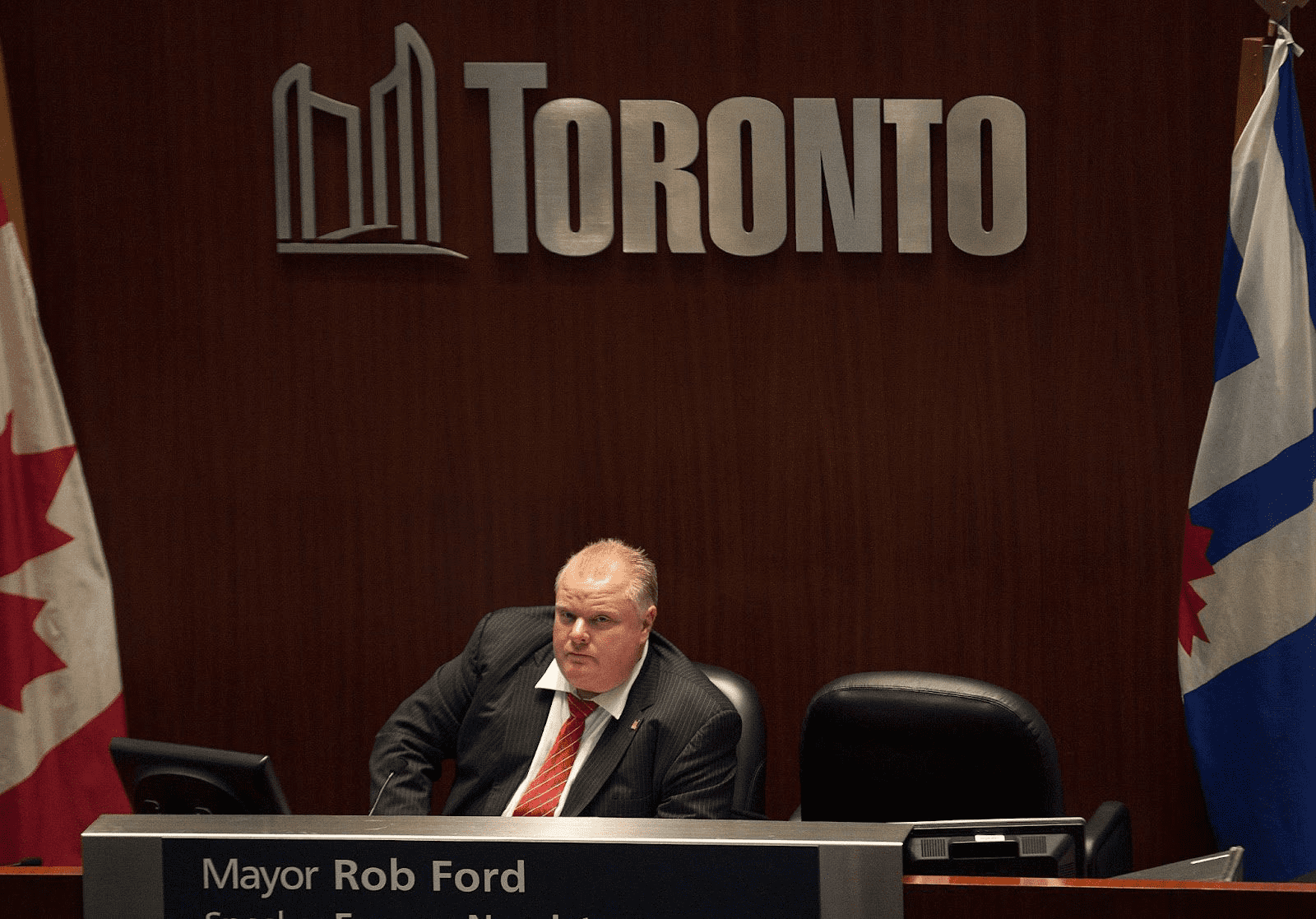
Rob’s father was actively involved in politics, serving as a Member of Provincial Parliament (MPP) in Ontario from 1995 to 1999. Inspired by his father, Rob began his political journey in 1997, running unsuccessfully for the council of the newly amalgamated City of Toronto.
In 2000, Ford ran again and was elected as a city councillor, serving until 2003. During his time on the council, Ford exhibited a blend of conservative values and controversial behaviour. He made offensive remarks about Asians, referring to them as “Orientals” who “work like dogs,” and faced backlash for comments about AIDS, suggesting that non-drug users and heterosexual individuals would not contract the disease. He later apologized for his remarks.
Despite his reputation for outbursts, Ford’s staunch opposition to tax increases and new city spending won him a loyal following, particularly among immigrants and younger voters.
In 2010, Ford campaigned for mayor under the slogan “Stop the Gravy Train,” receiving support from conservatives and securing victory with 47% of the vote.
Ford’s victory highlighted deep divisions between downtown Toronto residents, who favoured public investment, and suburban communities, who prioritized controlling tax hikes. These divisions culminated in debates over expanding transit into suburban areas.
As mayor, Ford clashed with public sector unions, advocated for tax freezes, and reduced city hall expenses. He also raised fees for recreational programs. Although spending growth slowed during his tenure, overall city expenses continued to rise under his budgets from 2011 to 2013.
Scandals and Controversies
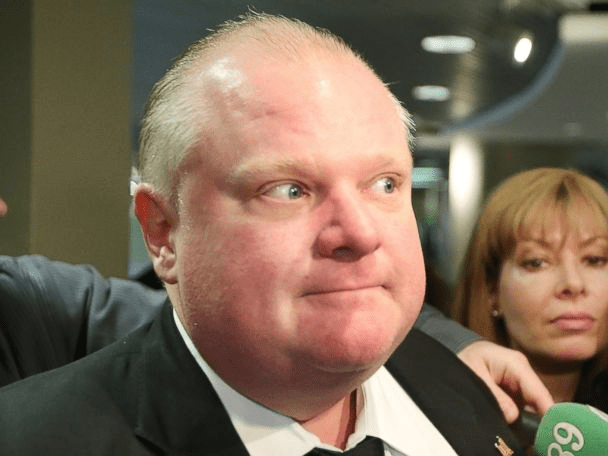
Ford’s behaviour often overshadowed his policies. By 2012, reports surfaced of him appearing intoxicated in public. Photos and videos of Ford under the influence began circulating on social media, fuelling public and media scrutiny.
In May 2013, international attention erupted after reports from the Toronto Star alleged the existence of a video showing Ford smoking crack cocaine. Ford denied the allegations, but the controversy snowballed, with further images and videos emerging. These included footage of Ford visibly intoxicated during a summer festival in Toronto’s Danforth neighbourhood.
In late 2013, Toronto Police Chief Bill Blair confirmed the existence of digital recordings implicating Ford’s driver and associate in drug-related activities. Ford later admitted to past drug use but refused to resign. Without legal grounds to remove him, the city council stripped him of key executive powers.
In 2014, Ford entered a rehabilitation program in Bala, Ontario, taking a leave of absence from his mayoral duties and reelection campaign. Later that year, he was diagnosed with liposarcoma, prompting him to withdraw from the mayoral race. Despite his diagnosis, Ford ran for a council seat and won.
On March 22, 2016, Rob Ford passed away, leaving behind a complex legacy marked by both his political initiatives and personal struggles.