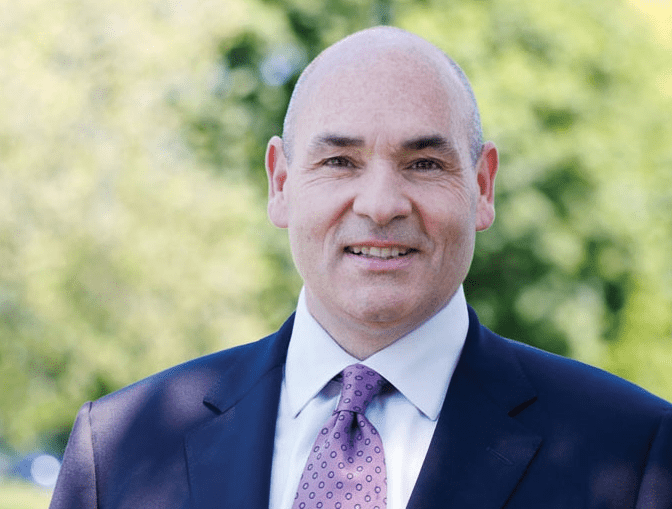

Politics is an integral part of the modern world. While some might think life without politics and politicians would be simpler, the reality is quite the opposite. Politics governs the economic, social, and administrative processes that shape our lives. Politicians play a crucial role in managing these processes. Today, we delve into the story of George Smitherman, a prominent politician with ties to Toronto who once aspired to become the city’s mayor. Learn more on torontoyes.com.
Background
Born in Weston, Ontario, in 1964, George Smitherman grew up in a large family and spent his youth helping in his father’s business. His interest in politics began during his student years at Burnhamthorpe Collegiate Institute, where he served as president of the high school student council. Enthralled by politics, Smitherman left higher education to pursue a political career.
He held various roles, including organizer for the Ontario Liberal Party, Chief of Staff to Ontario Cabinet Minister Hugh O’Neil, and senior advisor to federal cabinet ministers from Ontario. Smitherman also managed the campaign of former Toronto mayor Barbara Hall. Beyond politics, he ventured into business as a co-owner of a photo factory in downtown Toronto.
Political Career
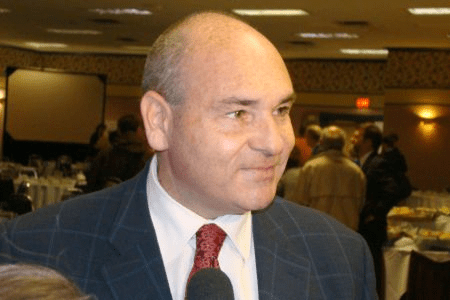
In 1999, Smitherman ran as the Liberal Party candidate for Toronto Centre–Rosedale. Known for his fiery rhetoric, he earned the nickname “Furious George.” Re-elected in 2003, Smitherman was appointed Minister of Health and Long-Term Care and Regional Minister for Toronto. In 2006, he became Ontario’s Deputy Premier.
Smitherman spearheaded initiatives like the Wait Times Strategy, which aimed to reduce delays for medical procedures, and the Aging at Home Strategy, designed to help seniors live independently with home care services. However, he faced criticism for failing to improve conditions in long-term care homes and for a healthcare records system that spent $647 million without competitive tenders.
In 2008, Smitherman transitioned to the Ministry of Energy and Infrastructure. He championed Ontario’s Green Energy Act, attracting investments in renewable energy. The World Wind Energy Association recognized his achievements, awarding him the 2009 World Wind Energy Award for advancing Ontario as a leading wind energy jurisdiction in North America.
In 2009, Smitherman announced his candidacy for Toronto’s mayoral race in 2010. Despite a strong campaign, he placed second. Afterward, Smitherman retired from politics to focus on business and became President and CEO of the Cannabis Council of Canada in 2020.
Personal Life
Smitherman has openly discussed his five-year battle with drug addiction, which he successfully overcame. He is also one of Canada’s first openly gay politicians. In 2007, he married his partner, Christopher Peloso, and the couple adopted two children, Michael and Kayla. Tragically, Peloso passed away in 2013, leaving Smitherman to raise their children alone. In 2017, he married Rolando Solomon Laurencio.
Politics is essential for managing societal, economic, and administrative frameworks. The wisdom and leadership of politicians often determine the direction of cities and nations. Despite a controversial biography, George Smitherman has played a significant role in shaping Toronto’s political landscape.
We hope this article has provided insight into Toronto’s political history and the life of one of its prominent figures. What are your thoughts on the city’s political scene? Share your comments on our social media platforms; your opinion matters to us.
Sources: